The vast majority of film and television equipment operates at voltages far higher than that of a single lithium battery cell, so series and parallel configurations of cells are required to achieve the target voltage.
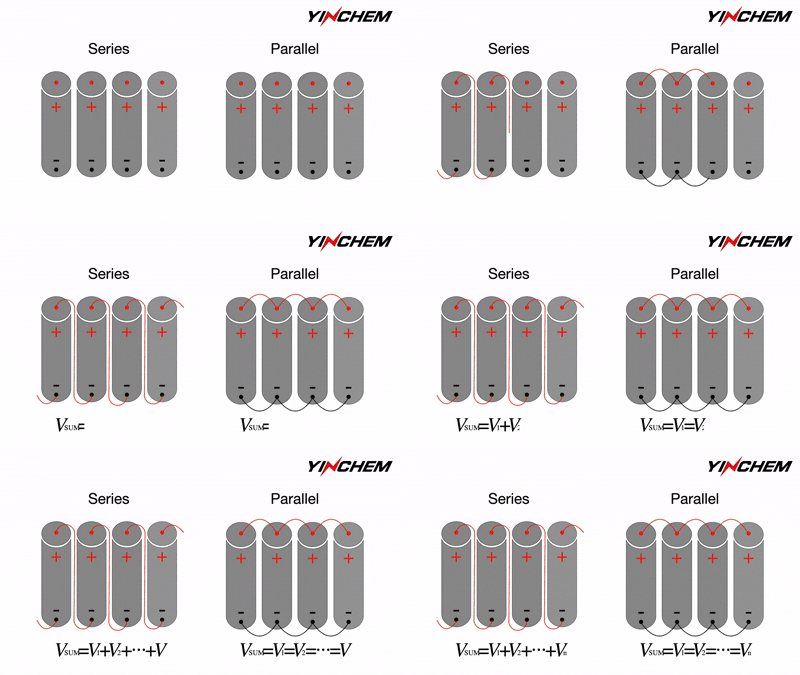
Series connection: multiple cells are connected end to end in a “positive-to-negative” manner, causing the voltages of individual cells to add up step by step, thereby forming a higher overall output voltage.
Parallel connection: the “positive terminals to positive terminals and negative terminals to negative terminals” of multiple cells are connected, allowing the capacities and output current capabilities of individual cells to add together. While keeping the voltage unchanged, this achieves longer runtime and stronger load capacity.
When multiple cells are assembled into a battery pack in series, the overall voltage increases accordingly.
Taking V-mount batteries as an example, the common nominal voltage is 14.4V, which is designed to meet the power requirements of mainstream film and television equipment.
However, when devices operate in the 24–30V voltage range, the requirements for the power supply system also increase. Taking high-power film and television lights such as the Nanlite Forza 500 and MixPanel 150 as examples, these lights require higher and more stable input voltage during startup and sustained high-brightness output. In such cases, traditional 14.4V V-mount batteries often struggle to drive them directly, leading to issues such as failure to power on, limited brightness, or frequent protection triggering.
In these application scenarios, 26V V-mount batteries become a more suitable choice. They can directly match the operating voltage range of the lights, ensuring reliable operation under high load and meeting the dual requirements for brightness and stability on professional shooting sets.
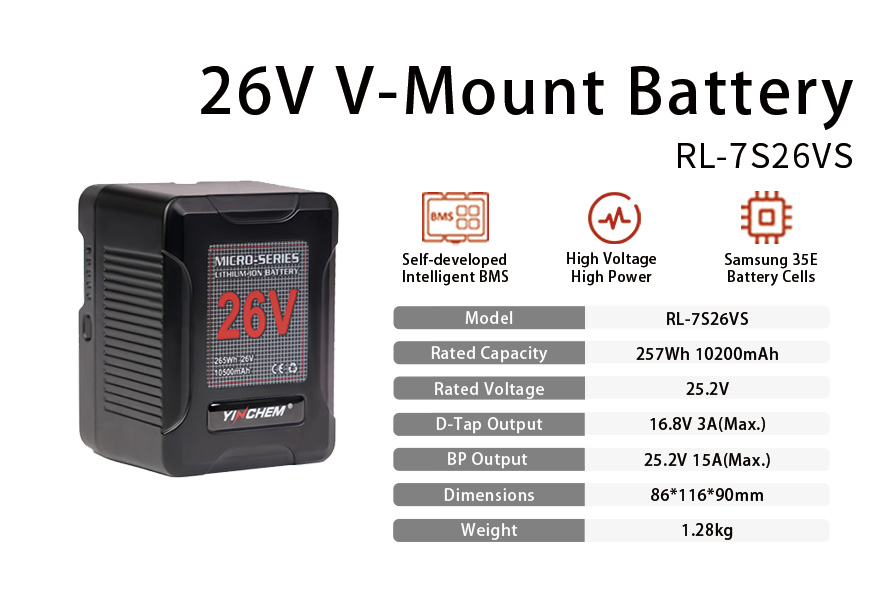
After meeting the voltage requirements, capacity and output capability can then be expanded through parallel design, so that both runtime performance and power stability are ensured in high-load, long-duration shooting scenarios.
Simply put, series connection determines “whether the voltage is sufficient,” while parallel connection determines “how long and how stably the power can be used.”
Whether the voltage is properly matched ultimately determines whether the device can operate safely and stably.
03|Capacity: the core indicator that determines “how long it can last”
Capacity (Wh) is essentially the total amount of energy stored in the battery that can be released.
With power fixed, the higher the Wh, the longer the usable time. You can think of capacity as the size of a fuel tank—the larger the tank, the farther you can theoretically go. Under the same device power consumption, higher Wh means longer usage time.
Basic calculation for theoretical runtime:
Runtime (h) ≈ Battery capacity (Wh) ÷ Device power (W)
For example:
🔋 A 211.68Wh battery
💡 Powering a device rated at 150W
🕐 Theoretical runtime is about 1.4 hours
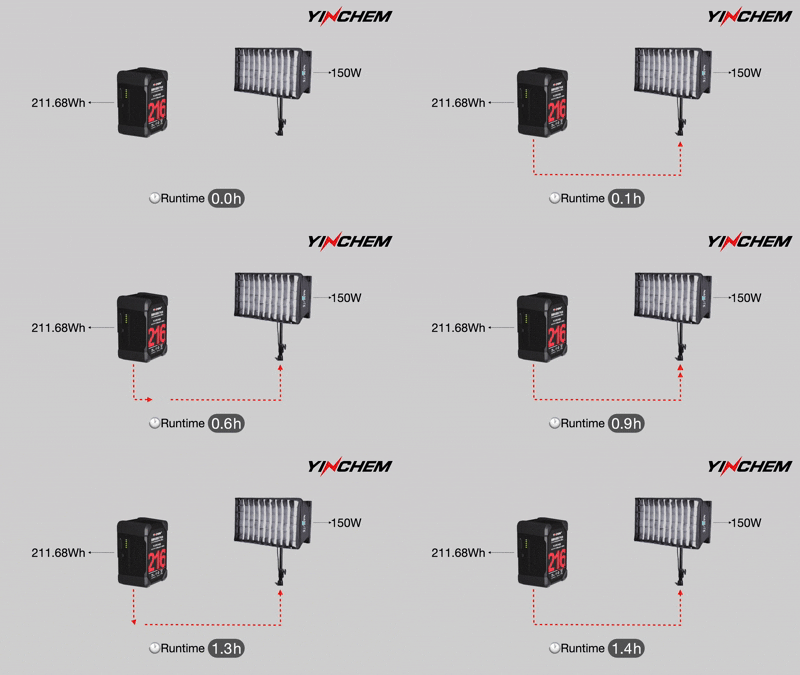
Of course, in real-world use, factors such as conversion efficiency and ambient temperature will also have an impact, but capacity is always the fundamental indicator for judging runtime.
🤔️Why is Wh more important than mAh?
You may have noticed that most power banks are labeled in mAh—do you know why?
mAh is commonly used for consumer electronics such as smartphones, cameras, and tablets, and reflects “electric charge.” Since consumer electronics generally operate at around 3.7V, comparing capacity in mAh is more intuitive when voltage is consistent.
However, it’s important to note that the same mAh represents different amounts of energy at different voltages.
For example:
10000mAh × 3.65V ≈ 36.5Wh
10200mAh × 14.4V ≈ 147Wh
With similar mAh values, the energy difference at different voltages can be huge.
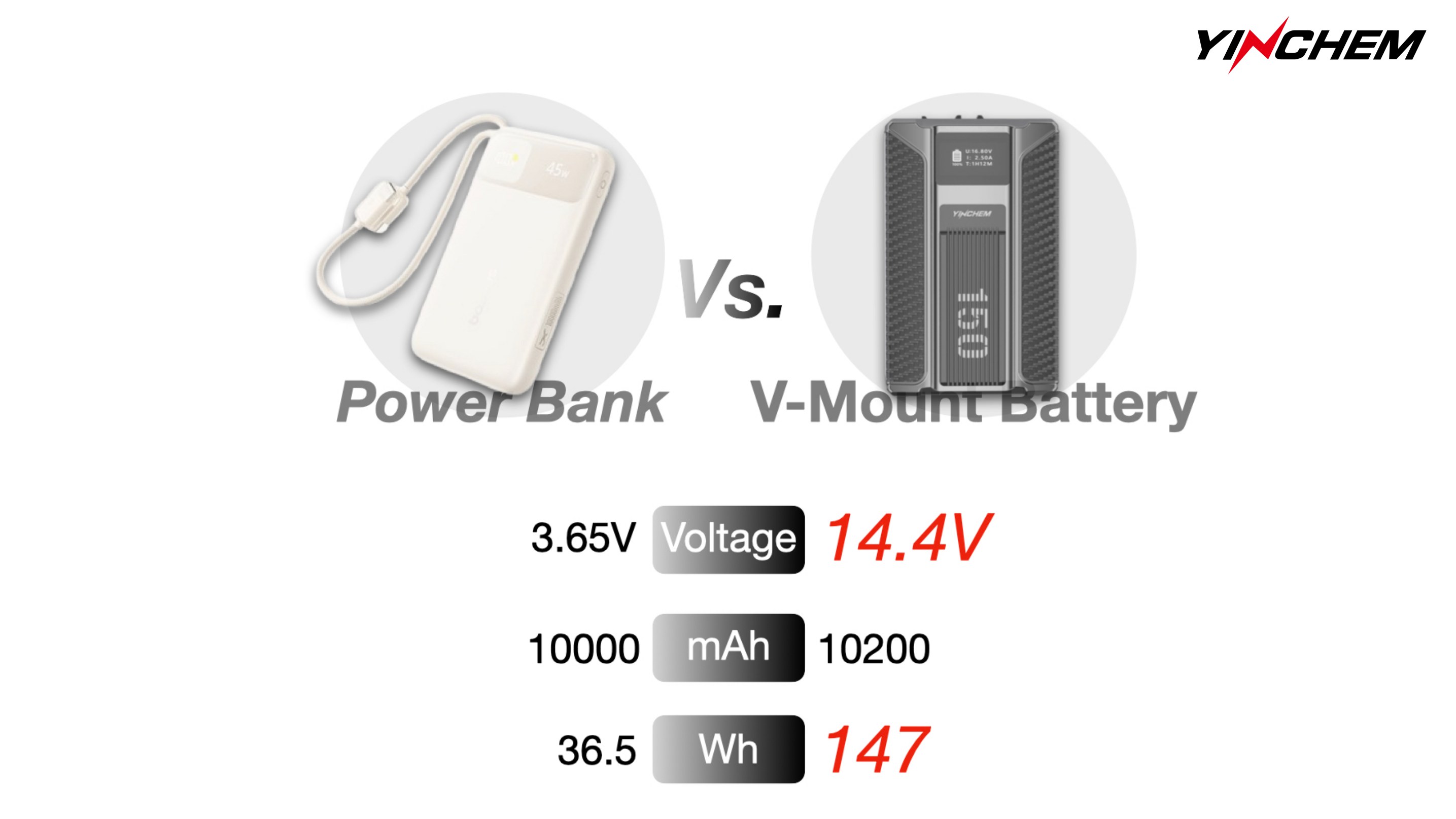
Therefore:
Because consumer electronics operate at relatively uniform voltages, mAh is commonly used; for professional batteries and film/television batteries, Wh is more meaningful as a reference.
04|Power: the capability boundary that determines “whether it can drive the load”
Power refers to the amount of energy a battery can output per unit time.
Its calculation formula is:
Power (W) = Voltage (V) × Current (A)
From the formula, we can see that the higher the voltage and the greater the current, the higher the power the battery can output.
But in actual use, power is often the most easily overlooked parameter—and also the one most likely to cause problems.
🧐Why does insufficient power cause issues?
In film and television equipment, the following situations commonly occur:
· High power demand at startup
· Rapid power fluctuations as light brightness changes
· Multiple devices being powered simultaneously
What’s especially important to note is that rated device power ≠ actual peak power consumption.
Taking film and television lights as an example, during cold start, the power can often reach 1.5 times or even higher than the rated power.
This places two different levels of requirements on the battery:
Continuous power: the foundation for long-term stable operation
Peak power: determines whether the device can start smoothly and handle instantaneous load shocks
If the battery’s maximum output power or peak power is insufficient, the following issues are likely to occur:
· Failure to start or startup failure
· Black screen, reboot, instantaneous power cut
· Triggering the battery’s overcurrent / overvoltage protection
Ultimately, power determines:
· Whether the device can start normally
· Whether it will lose power, black out, or shut down under high load or power fluctuations
· Whether the entire power supply process is stable and reliable
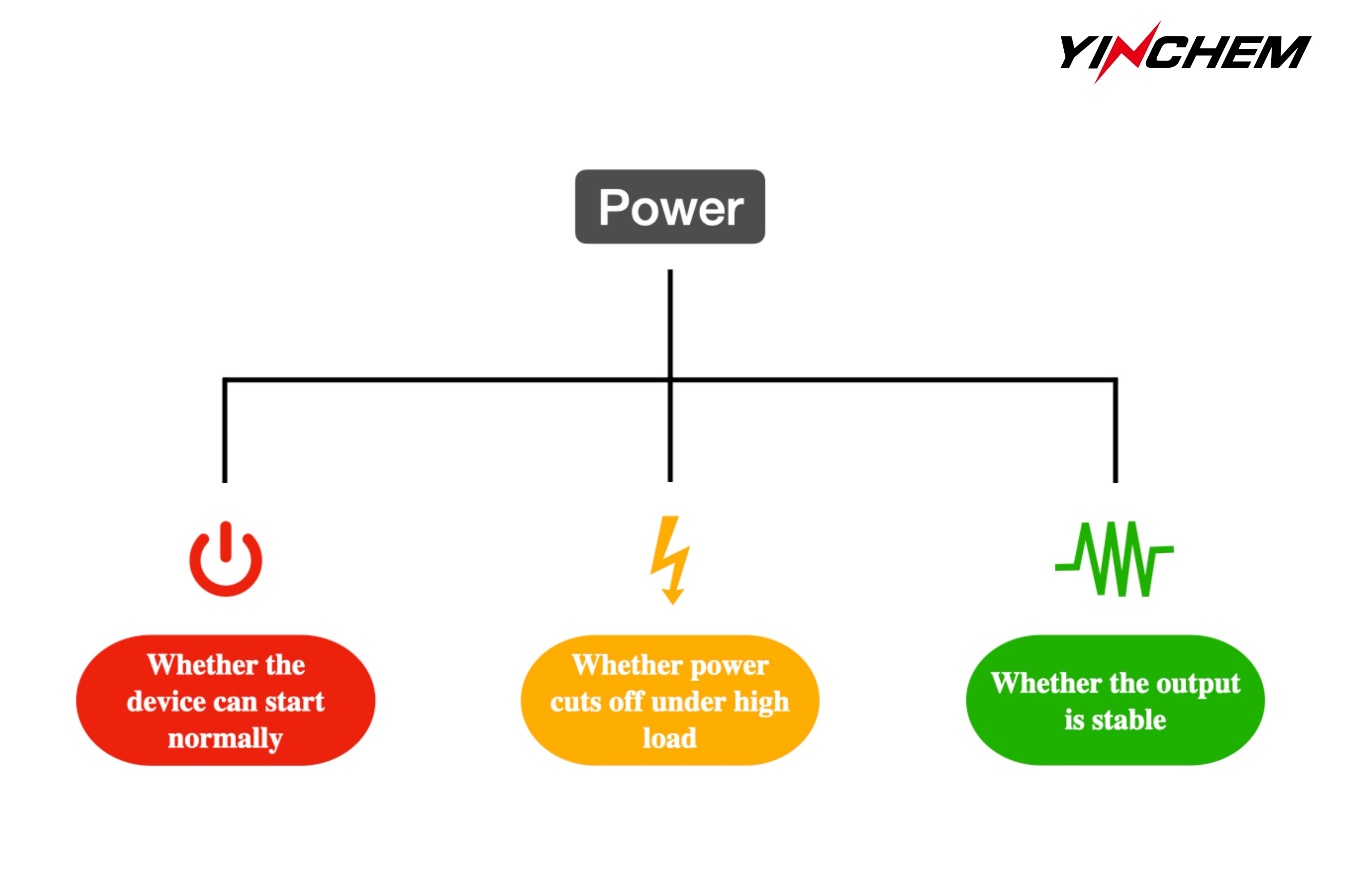
If capacity is compared to a fuel tank, then power is the engine’s horsepower. No matter how much fuel you have, if the horsepower is insufficient, the vehicle won’t move; likewise, no matter how large the battery capacity is, if the output power is insufficient, the device still won’t work.
A common example:
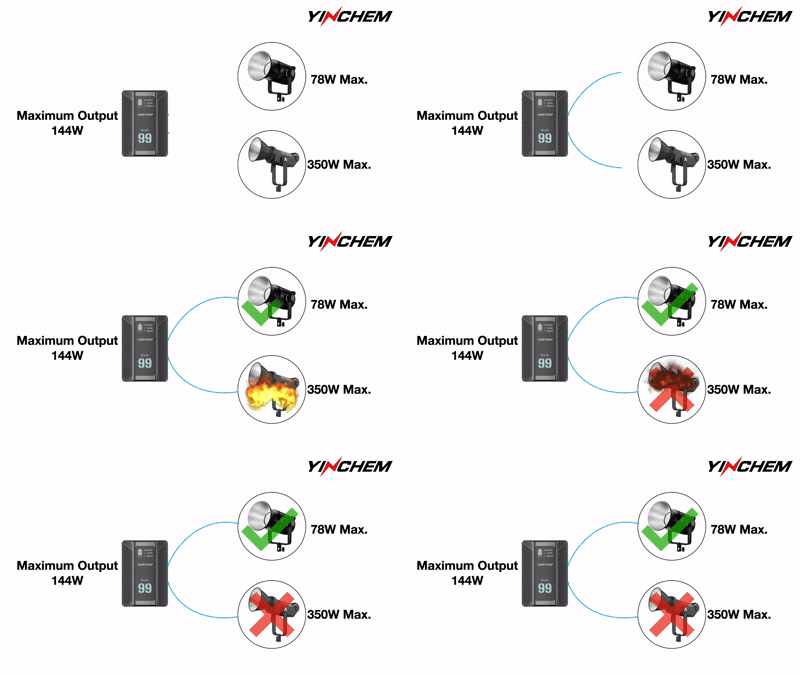
A battery has a large capacity, but a maximum output power of only 144W. When you connect a light or camera device with a maximum power of 350W, the result may be failure to start or immediate protection shutdown. Therefore, power is the bottom-line condition that determines whether a battery can drive a device.
05|Capacity vs Power: two dimensions, both indispensable
Many selection mistakes stem from treating “capacity” as the sole standard of “performance.”
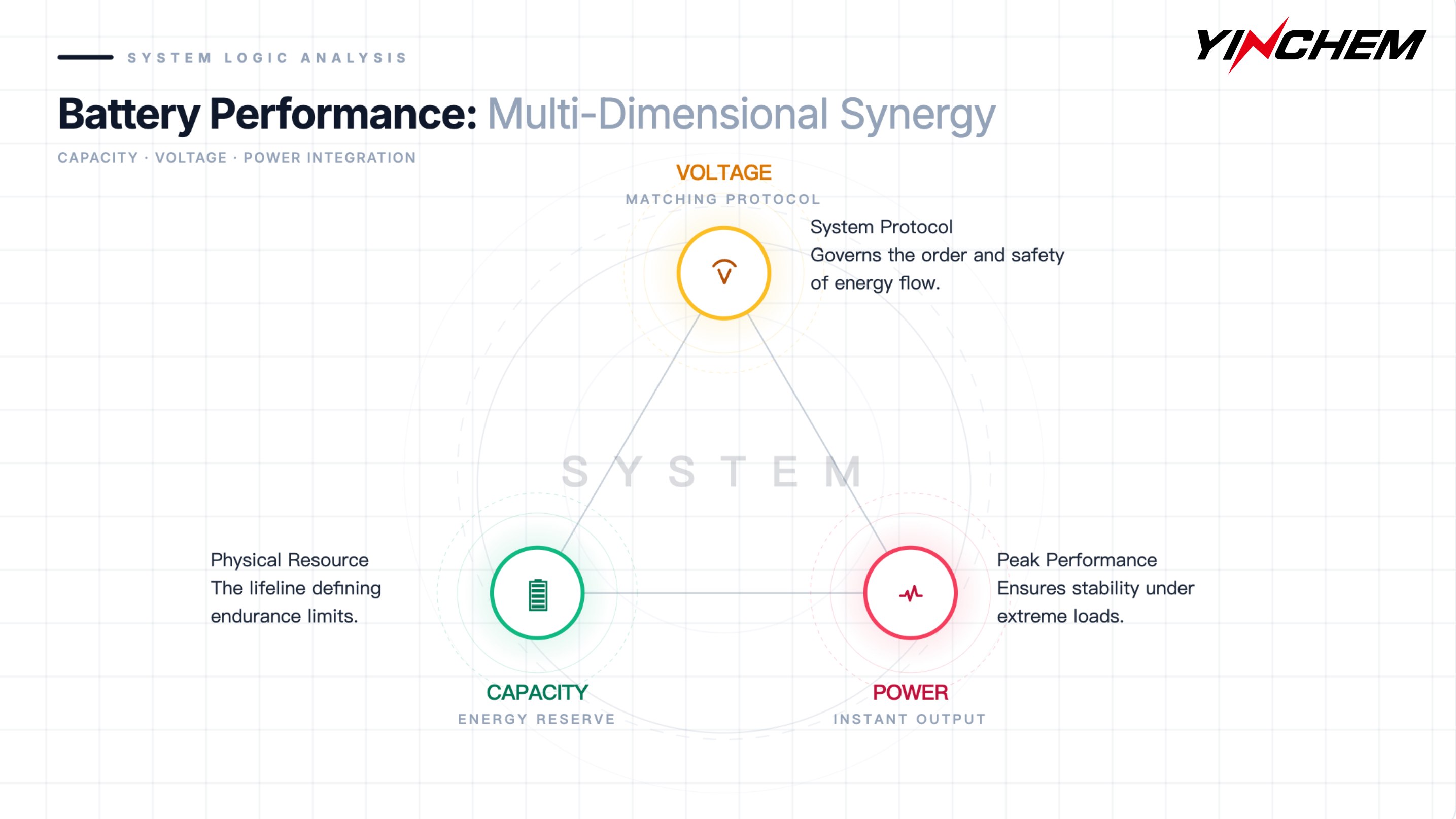
Capacity determines how much energy a battery can store and directly affects how long a device can run; power determines how much energy the battery can output per unit time and affects whether the device can start properly and operate stably under high load.
Simply put:
Capacity determines the total amount
Power determines the upper limit
Just like a car:
Large fuel tank → can go farther
Strong engine → can pull the load and run steadily
Therefore, capacity and power are not an “either-or” choice, but must be matched together.
The correct battery selection logic is always to meet power requirements first, then consider capacity.
05|How to choose the right battery?
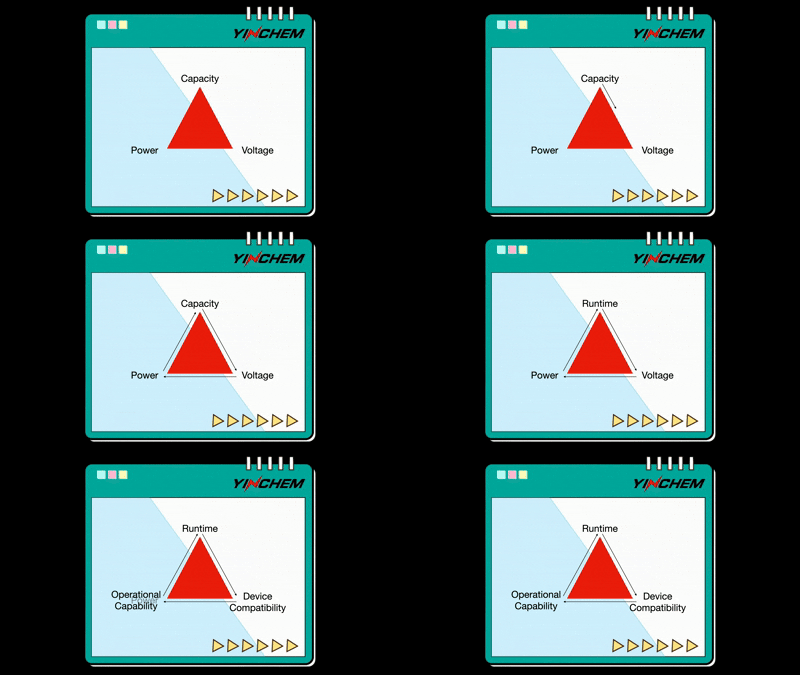
When selecting a battery, you can’t just look at whether the “capacity is large.” You need to first confirm whether it can be used, then determine whether it can actually drive the load, and only then consider how long it can run. In other words, you should filter step by step from three core dimensions—voltage, power, and energy—to truly match your device’s requirements.
① Check voltage (V): first confirm whether the device can be used
When checking voltage, the first thing to look at is not the “maximum voltage,” but whether the nominal voltage matches the device’s requirements.
For example, the commonly seen nominal 14.4V in film and television equipment (about 16.8V when fully charged) is the typical operating voltage range of V-mount batteries.
The battery’s output voltage must fall within the device’s allowable operating range—this is the prerequisite for safe and stable use.
If the voltage does not match, at best the device may fail to start or restart frequently; at worst, protection may be triggered or the device may even be damaged. Especially for high-voltage or professional equipment, choosing the wrong voltage makes any subsequent discussion of capacity and power meaningless.
② Check power (W): then determine whether it can drive the load
After confirming voltage compatibility, the second step is to check whether the output power is sufficient.
Power determines whether the battery can provide stable power under high load or during instantaneous power fluctuations in real-world operation.
When the device’s operating power approaches or exceeds the battery’s maximum output capability, voltage drops, performance limitations, or even sudden power cuts at critical moments are likely to occur.
Therefore, the battery’s maximum output power must be higher than the device’s actual power demand, with a certain margin reserved, to ensure stable operation under complex working conditions.
③ Check capacity (Wh): finally consider how long it can run
Only after voltage is matched and power is sufficient does capacity truly determine runtime.
Wh represents the total amount of energy the battery can deliver. The higher the Wh, the longer the theoretical usage time under the same device power consumption.
In shooting and live-streaming scenarios that require long periods of continuous operation, higher-capacity batteries can effectively reduce the frequency of battery changes, making the workflow more continuous and efficient.
07|Different parameters for different shooting needs
Once you understand the relationship between capacity, voltage, and power, when it comes to actual selection, the key is not “which battery has the best specs,” but which set of parameters best suits your shooting scenario.
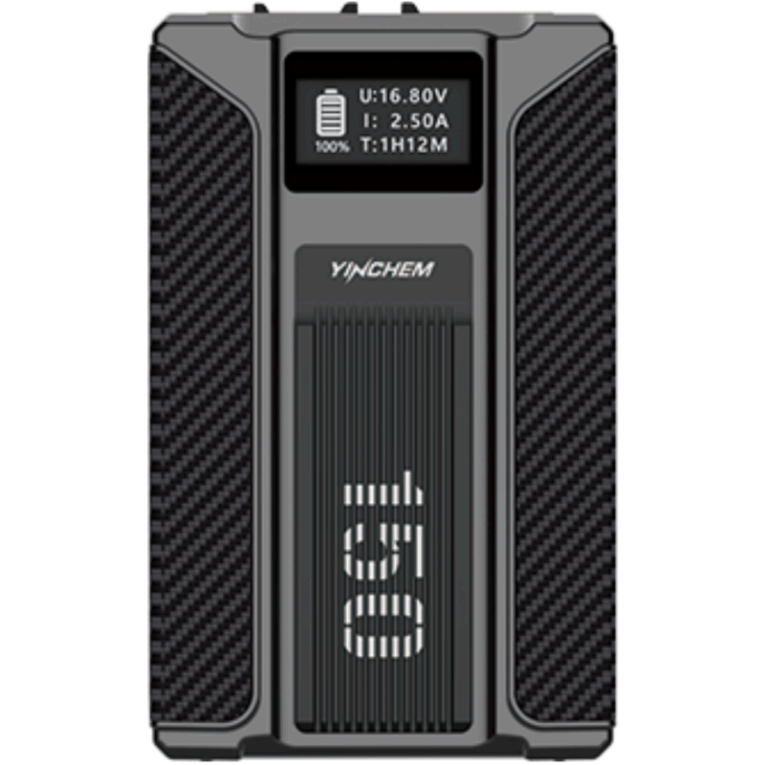
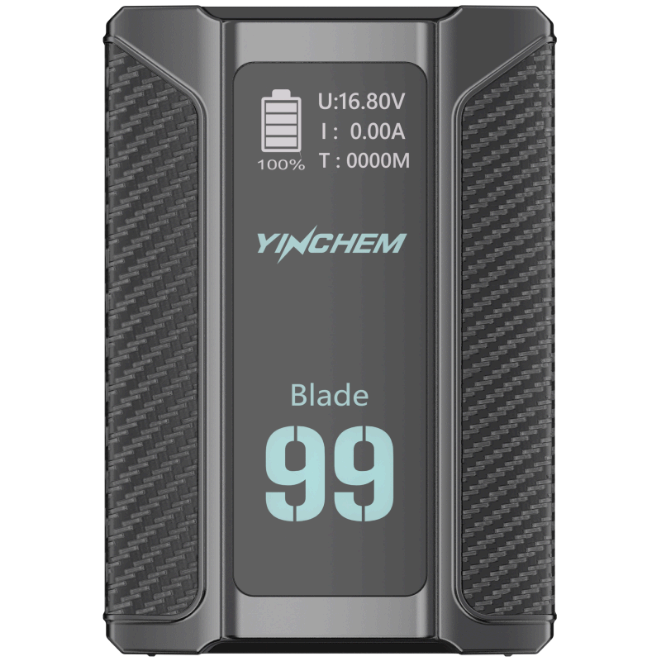
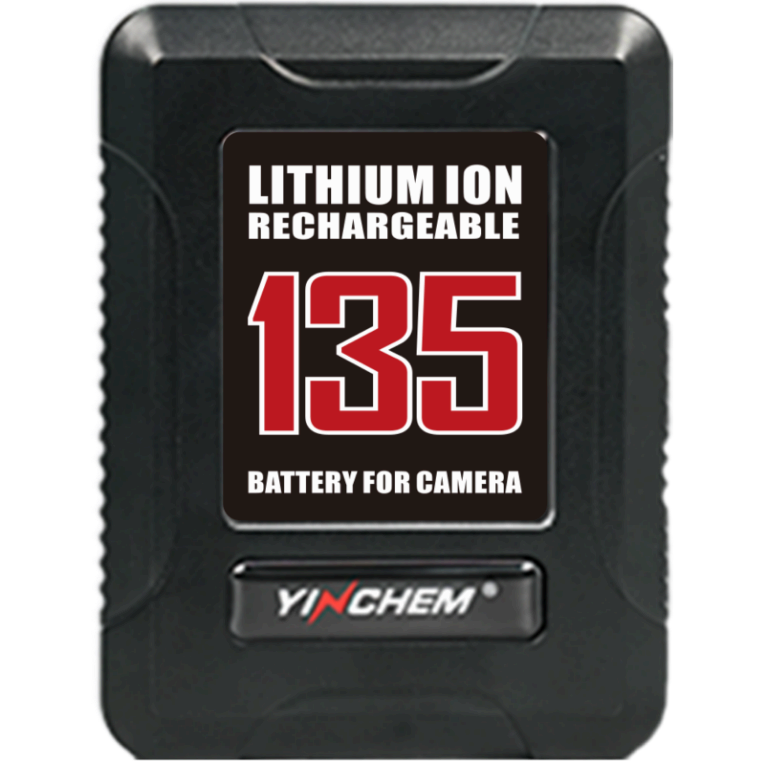
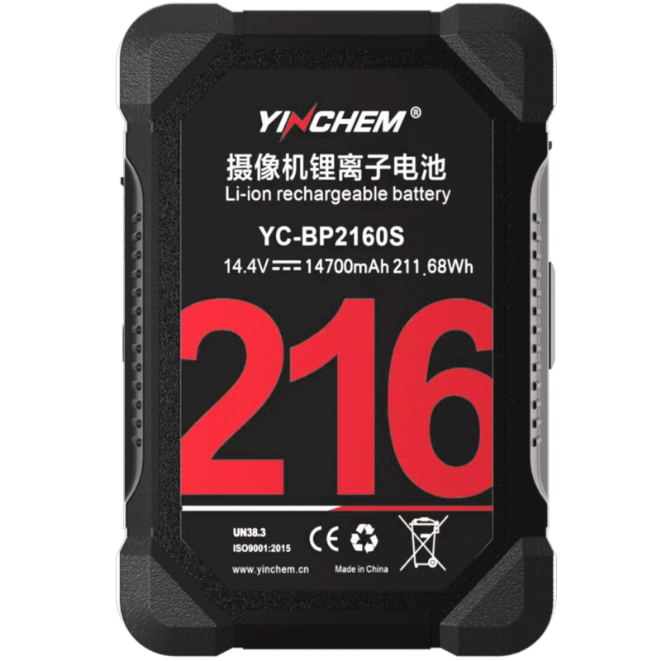
Below are the specifications of several Yingchen V-mount batteries:
| Product Model |
Nominal Voltage |
Maximum Power |
Capacity |
| Blade 150S |
14.4V |
216W |
147Wh |
| Blade 99S |
14.4V |
144W |
97Wh |
| YC-C135S |
14.4V |
216W |
146.9Wh |
| YC-BP2160S |
14.4V |
216W |
211.68Wh |
| RL-7S26VS |
25.2V |
378W |
257Wh |
In real film, television, and power usage environments, different device combinations and different working intensities place very different demands on batteries.
① Single-camera shooting / lightweight mobile shooting
For shoots centered around a cinema camera or a small number of accessories, power consumption is relatively stable and not very high, with greater emphasis on portability and reasonable runtime.
The core requirements for this type of scenario are:
· Voltage compatible with mainstream devices
· Output power sufficient for startup and stable operation
· Moderate capacity, balancing size and runtime
Medium-capacity, lightweight V-mount batteries are well suited here, ensuring uninterrupted shooting without adding excessive burden.
② Long-duration shooting / continuous operation scenarios
In documentaries, live streaming, and similar scenarios, equipment often needs to run continuously for long periods, placing extremely high demands on runtime.
The core requirements for this type of scenario are:
· Higher capacity to reduce frequent battery changes
· Stable voltage to avoid voltage drop after prolonged operation
· Output power sufficient for sustained load
In these cases, the importance of capacity is significantly amplified—but only on the premise that power and voltage still meet the device’s requirements. Otherwise, situations where “there’s still charge left, but it can’t be used” will still occur.
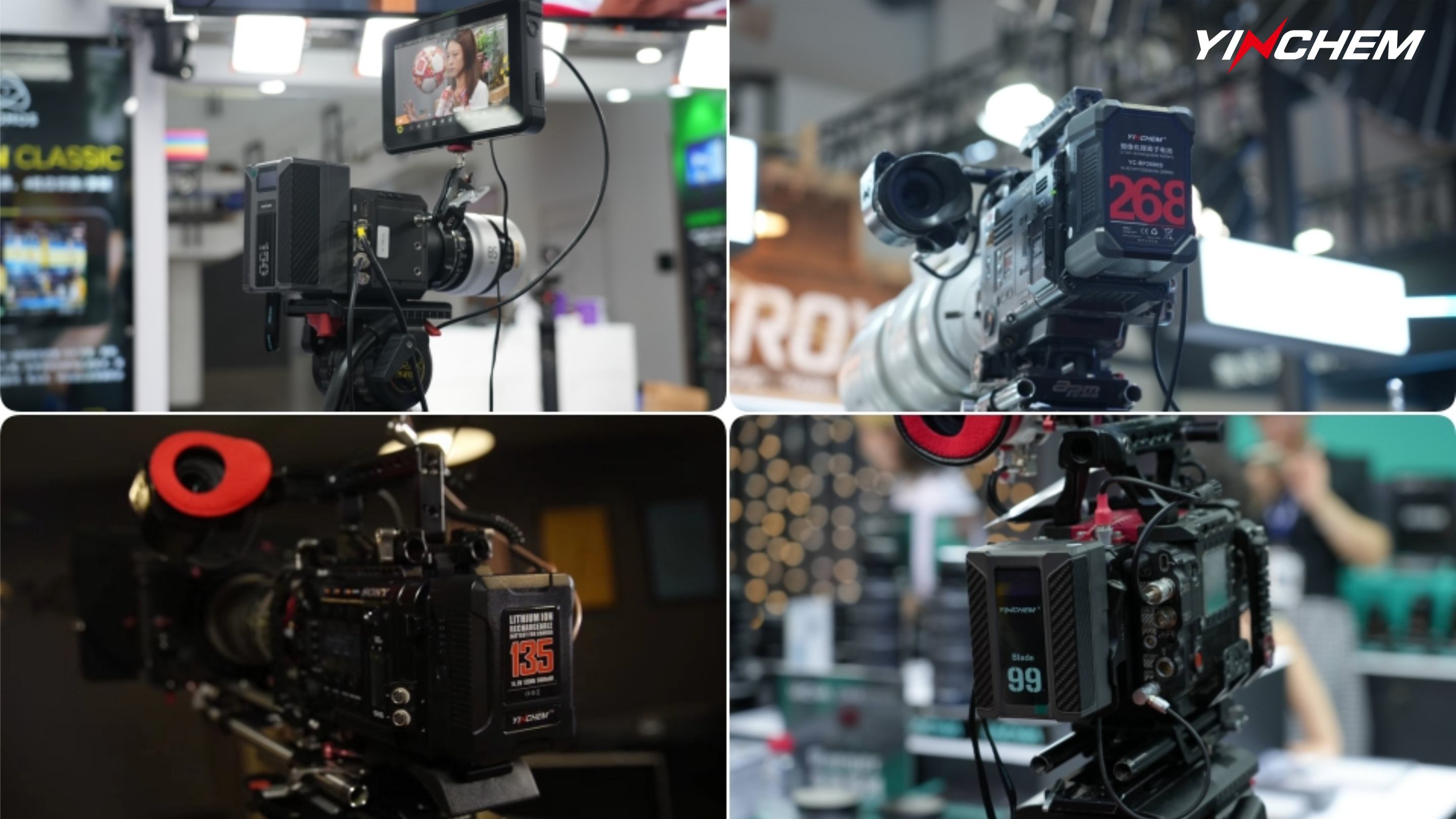
Runtime is never determined by capacity alone, but by the combined effect of capacity, voltage, and power. Ignoring any one of these dimensions will be magnified into problems in real-world use.
Once you understand this logic, parameters are no longer cold numbers—they clearly correspond to your equipment setup, shooting intensity, and usage scenarios. And a “suitable” battery is no longer just a runtime tool, but a critical element that makes shooting more stable and more reassuring.









 Company Email:
 Company Address: